
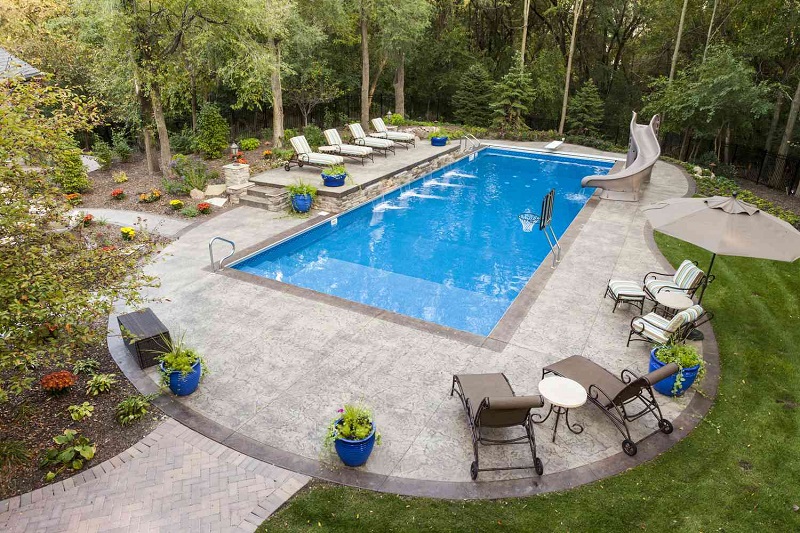
A growing number of homeowners are searching for methods to make their houses, especially their pools, more environmentally friendly as people become more conscious of environmental issues. Your pool’s long-term financial savings can be achieved by incorporating water-saving features, energy-efficient heating systems, and sustainable materials into its design. These changes will also greatly lessen the pool’s negative environmental effects.
Selecting Eco-Friendly Materials
The first step in building an eco-friendly pool is choosing sustainable building materials. Choosing materials with little environmental impact and longevity can have a significant impact. For pool decks and surrounding areas, for example, think about utilizing natural or repurposed materials like stone or wood. In addition to being visually beautiful, these materials lessen the need for fresh resources. Furthermore, reduced replacement frequency or recycled materials can be used to create environmentally friendly pool liners that reduce the overall impact of the pool on the environment.
Options for Energy-Efficient Heating
Pool heating can be energy-intensive. However, energy-efficient heating can reduce energy use and carbon emissions. Solar pool heating systems employ solar radiation instead of fossil fuels, making them ideal for ecologically conscious households. A heat pump uses power to transmit heat from the air to the pool water, saving energy. Considering installing The wonderful looking inground swimming pools birmingham? These energy-saving heating alternatives will lengthen your swimming season without rising your energy expenses.
Features That Conserve Water
Water conservation is crucial to eco-friendly pools. Traditional pools lose water to backwashing, leaks, and evaporation. A pool cover can cut evaporation by 50%, reducing water waste. Water conservation and pool cleanliness can be achieved by choosing a filter that requires less backwashing. Adding a rainwater collection system to the pool might reduce municipal water use. These water-saving features reduce water bills and preserve an important resource.
Eco-Friendly Pool Maintenance
Your pool must remain environmentally friendly as it was built. Traditional pool maintenance includes harmful chemicals that can harm humans and the environment. Still, there are greener options. When seawater chlorination replaces traditional chlorine, chemical additives are reduced. Natural pool cleaning systems use plants and biological filters to clean your pool without chemicals. Regularly maintaining your pool’s pumps and filters saves energy. These eco-friendly pool maintenance methods reduce environmental effect while preserving cleanliness and safety.
Conclusion
Including eco-friendly elements in your pool is a sustainable and conscientious decision that helps the earth and your pocketbook. You may enjoy the luxury of a pool while reducing its environmental impact by using water-saving measures, investing in energy-efficient heating systems, and choosing sustainable materials. These green building techniques can assist you in creating an outdoor area that is more environmentally conscious and sustainable, regardless of whether you are creating a new pool or renovating an old one.
